
61%
say poor fit was the top reason they returned clothing or shoes (industry research).
For years, the industry's answer to returns has been logistics. Make returns free. Make them easy. Add drop-off points, prepaid labels and faster refunds. Much of that work has made life better for shoppers, and retailers still need it. But it treats returns as a delivery problem in reverse, when for clothing and shoes the cause usually sits much earlier.
How big the number is, and what it covers
NRF and Happy Returns estimated that US retailers would see $849.9 billion in returned merchandise in 2025, 15.8% of total sales (NRF & Happy Returns, 2025 Retail Returns Landscape, Oct 15, 2025). Headlines often round it up, and just as often misquote it.
So, to be precise about scope: this is all US retail, not only fashion. It includes electronics, home goods, beauty, groceries and everything else people buy and send back. It is a measure of how big returns are across the whole economy, not a measure of clothing returns.
That matters, because the causes differ by category. A returned television and a returned pair of trousers come back for different reasons, and the fix for one is not the fix for the other.
For clothing, the cause is usually fit
When researchers ask shoppers why they return clothing and shoes, one answer dominates. In Rithum's 2025 consumer research, 61% said poor fit was the top reason they returned clothing or shoes (Rithum, 2025 Global Returns & Profit Impact Report, 2025).
That is not a shipping failure. The parcel arrived on time and undamaged. The garment was what the product page described. It just did not fit the person who ordered it.
Why logistics can't fix fit
Better reverse logistics makes a wrong-size return cheaper and less painful. It does not stop the wrong size from being ordered. Even the fastest returns network in the world starts after the mistake has already been made.
The mistake itself is understandable. Shoppers choose from size labels, and size labels vary between brands, between product lines and sometimes between seasons of the same product. A size chart helps when the shopper has measured themselves carefully and the chart reflects the garment, but that is a lot to ask on every product page. Many shoppers respond sensibly: they order two sizes and send one back.
Moving the decision upstream
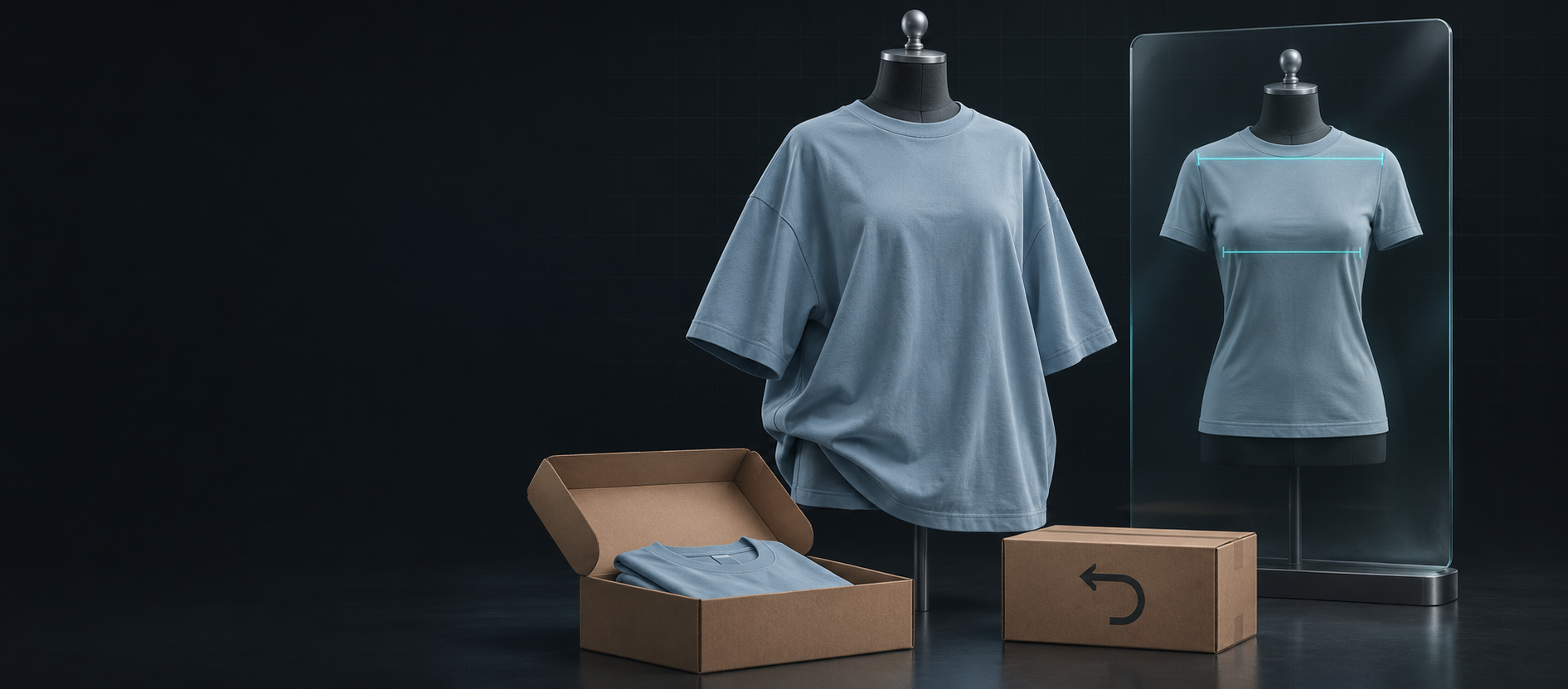
If the cause is the size decision, the fix has to happen at the size decision. That means bringing two pieces of information together before checkout: the shopper's body and the garment's measurements.
That is what VyMetric is building. You take guided photos with your phone. Your measurements stay encrypted on your phone and are matched to each product's size specs, so the size you choose reflects your body and that particular garment, not a guess based on a label.
Shoppers say they want this. In the same research, 39% said better size and fit recommendations would significantly reduce their returns (Rithum, 2025 Global Returns & Profit Impact Report, 2025). We read that as demand for a better answer, not as a promise of a specific result.
What this means for retailers
None of this replaces good returns handling. People will still change their minds, gifts will still miss, products will still be damaged in transit. Retailers need convenient, well-run returns for all of that.
What changes is the split of effort. Logistics improves what happens after a purchase goes wrong. Fit matching reduces how often a clothing purchase goes wrong for size reasons. The two work together, and the second is the one that removes a return rather than processing it more cheaply.
We do not publish reduction figures before launch. When we work with a retailer, we agree how results will be measured, against which baseline and for how long.
The takeaway
The $849.9 billion figure describes all US retail returns (NRF & Happy Returns, 2025 Retail Returns Landscape, Oct 15, 2025), and logistics is a reasonable answer to much of it. For clothing and shoes, though, the most common cause is the wrong size, and that is decided before anything ships.
If you want to shop with more confidence in your size, join the VyMetric waitlist. Target launch: Q3 2027. If you sell clothing or accessories online, request a presentation.